Show Notes: s3e105 with Amelia Hugill-Fontanel
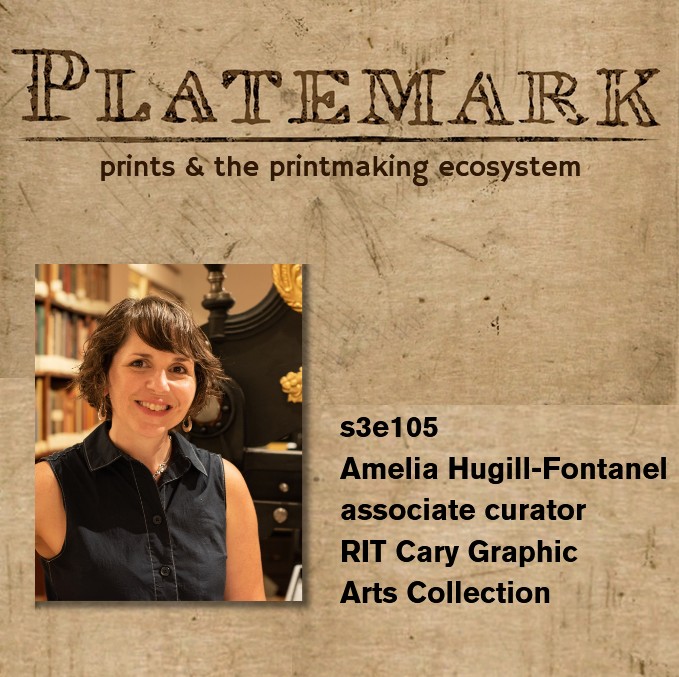
What happens when a rare book library is also a working machine shop? This week, Ann sits down with the formidable Amelia Hugill-Fontanel, Associate Curator at the Cary Graphic Arts Collection at RIT. Amelia isn't just a keeper of history; she’s a "press fixer" who maintains a fleet of functional 19th-century printing presses.
We dive into the incredible legacy of Melbert B. Cary Jr., the intersection of historical type and 3D-printing innovation, and the inspiring rise of women in the traditionally "macho" world of iron hand presses. Whether you’re a letterpress obsessive or a curious novice, Amelia’s journey to curator and mechanic is a masterclass in keeping the history of the graphic arts alive and spinning. One print at a time.
https://www.rit.edu/carycollection/
@ameliafont1
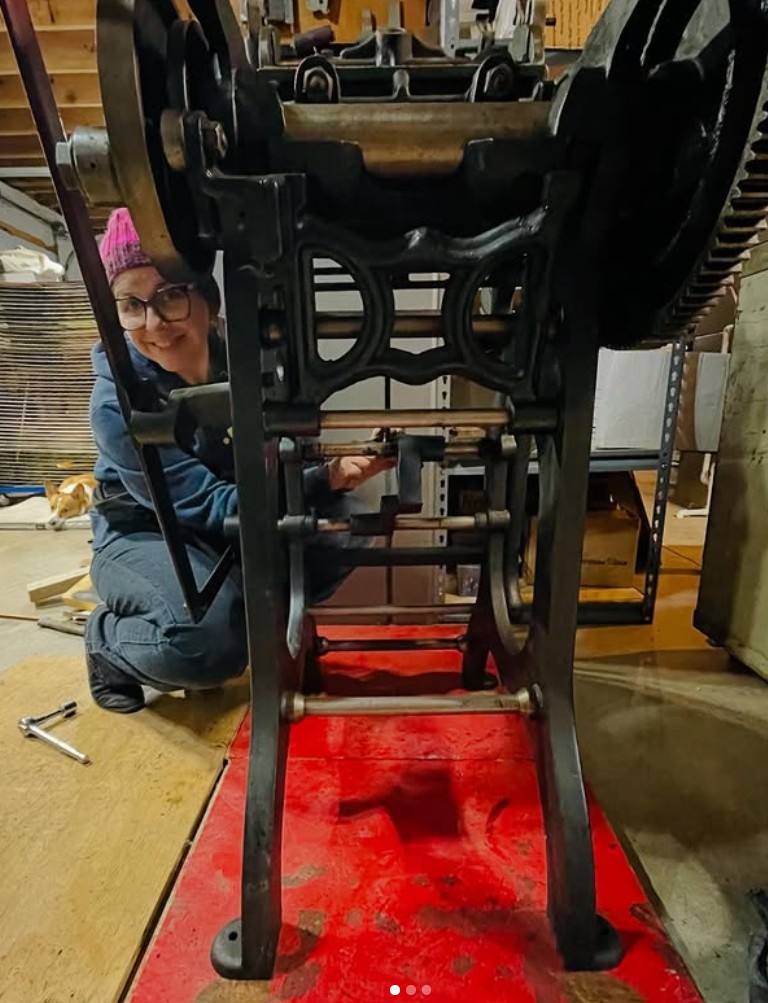
Amelia Hugill-Fontanel assembling an 1880s Chandler & Price Oldstyle platen press in her home studio.
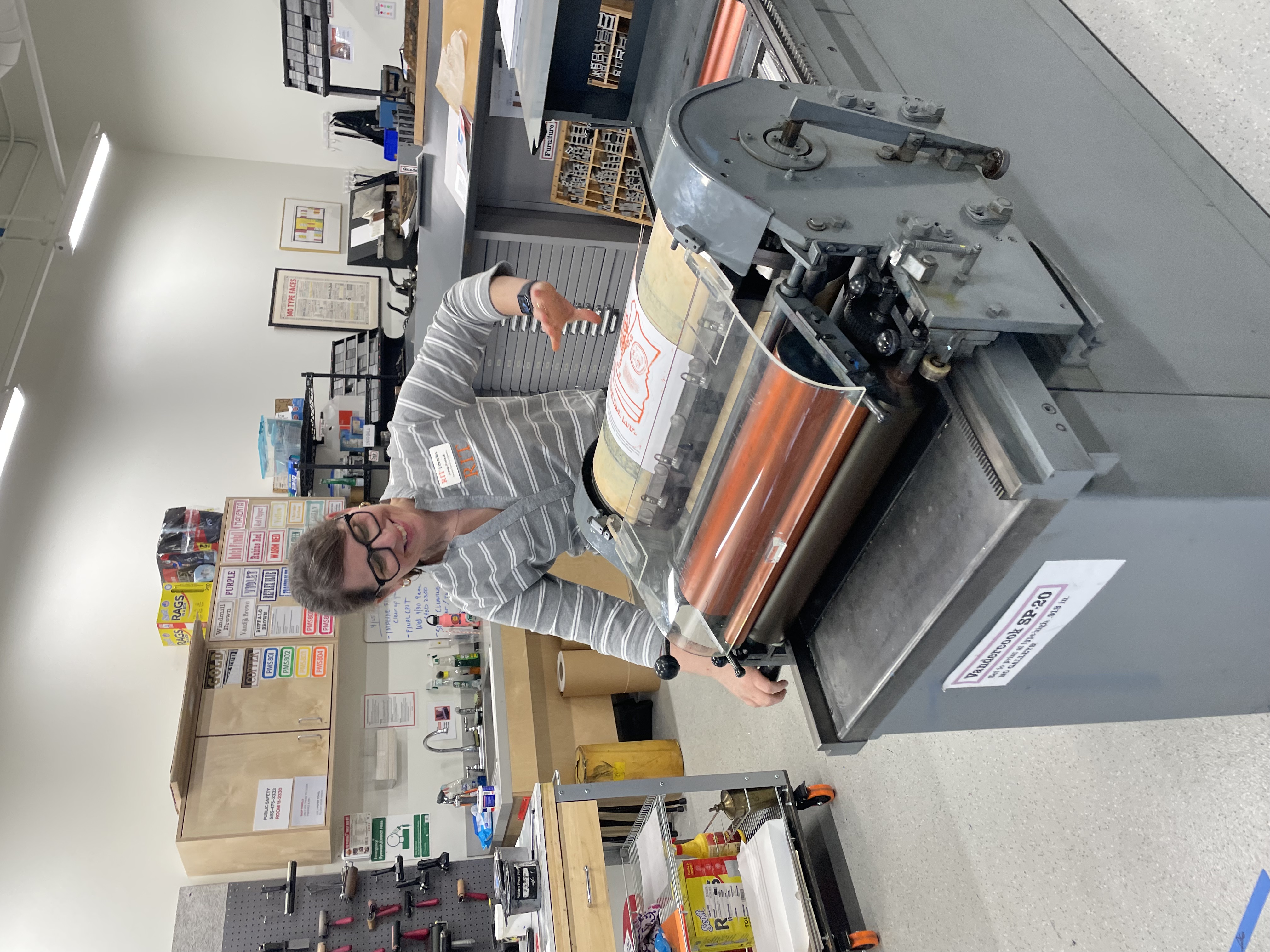 Amelia Hugill-Fontanel printing in 2025 on a Vandercook SP-20 proof press from the 1950s.
Washington handpress, A. B. Taylor & Co., New York, c. 1880.
Platen Press Model 1 Improved, J. W. Daughaday, Philadelphia, Pennsylvania, c. 1874.
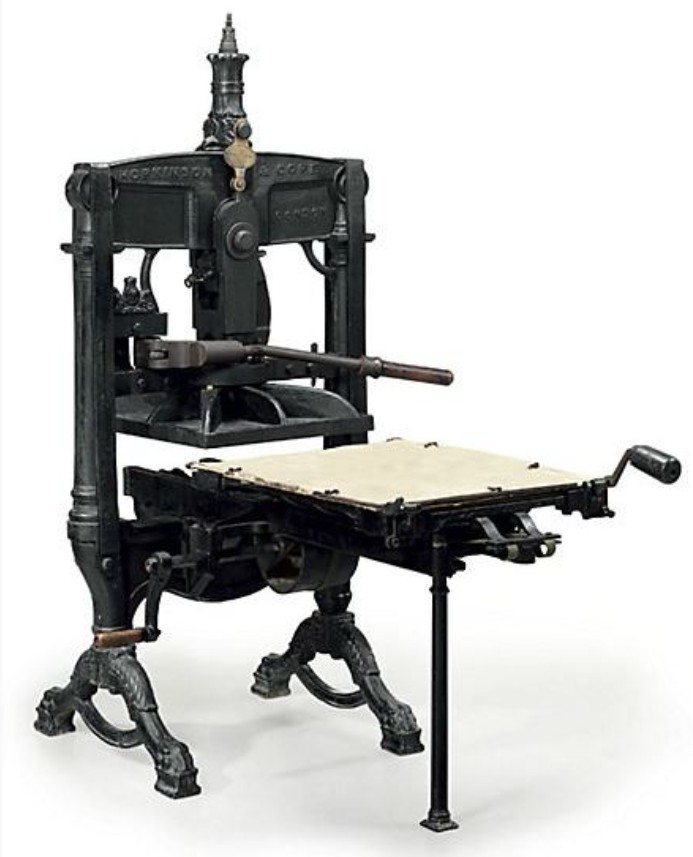 Albion Press No. 6551 “Kelmscott/Goudy Press,” built by Hopkinson & Cope London, 1891. Purchased by RIT Cary Collection in 2013.
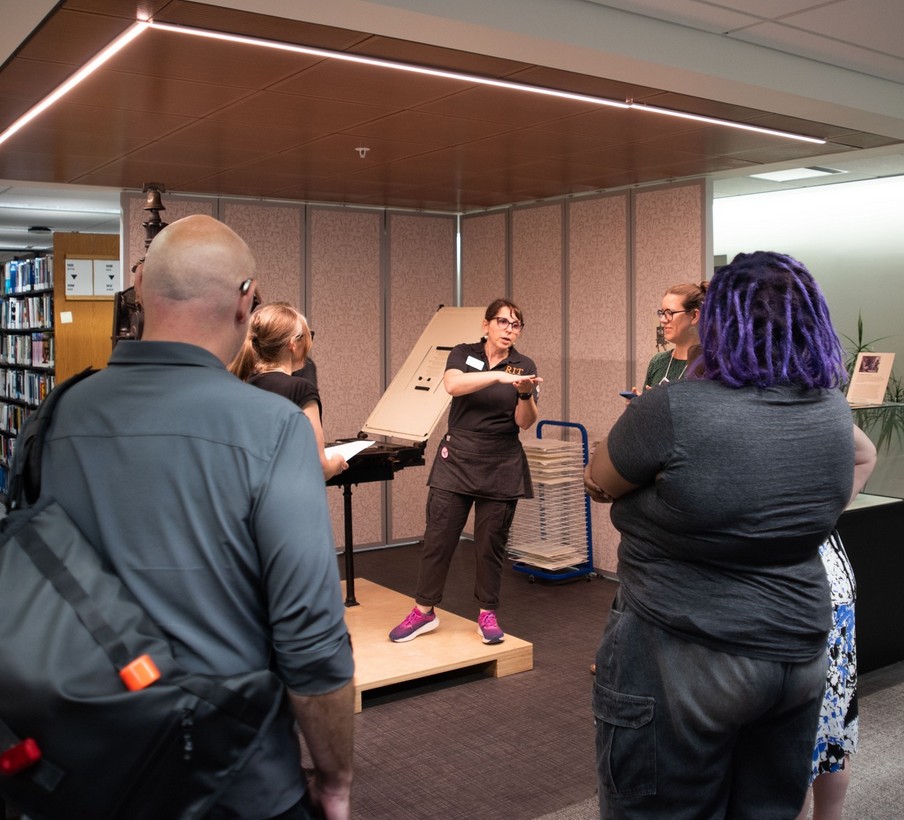 Amelia Hugill-Fontanel conducts a demonstration on the Kelmscott/Goudy Press to SHARP 2025 conference goers.
Beatrice L. Warde. “This is a Printing Office,” 1932. Typeset by Fontanel in Melior metal types and printed on the Cary’s 1880s Washington iron handpress.
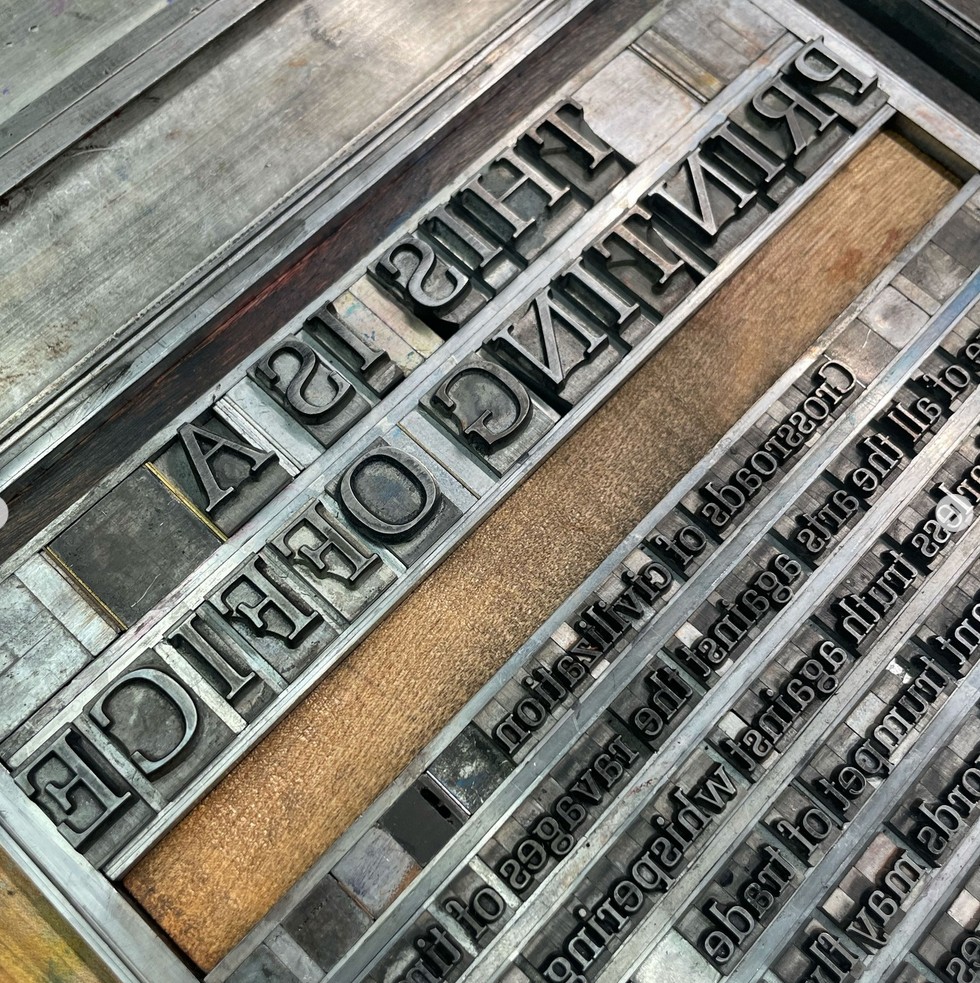 Melior type set in the bed of the press to print Beatrice L. Warde’s “This is a Printing Office” originally published in 1932.
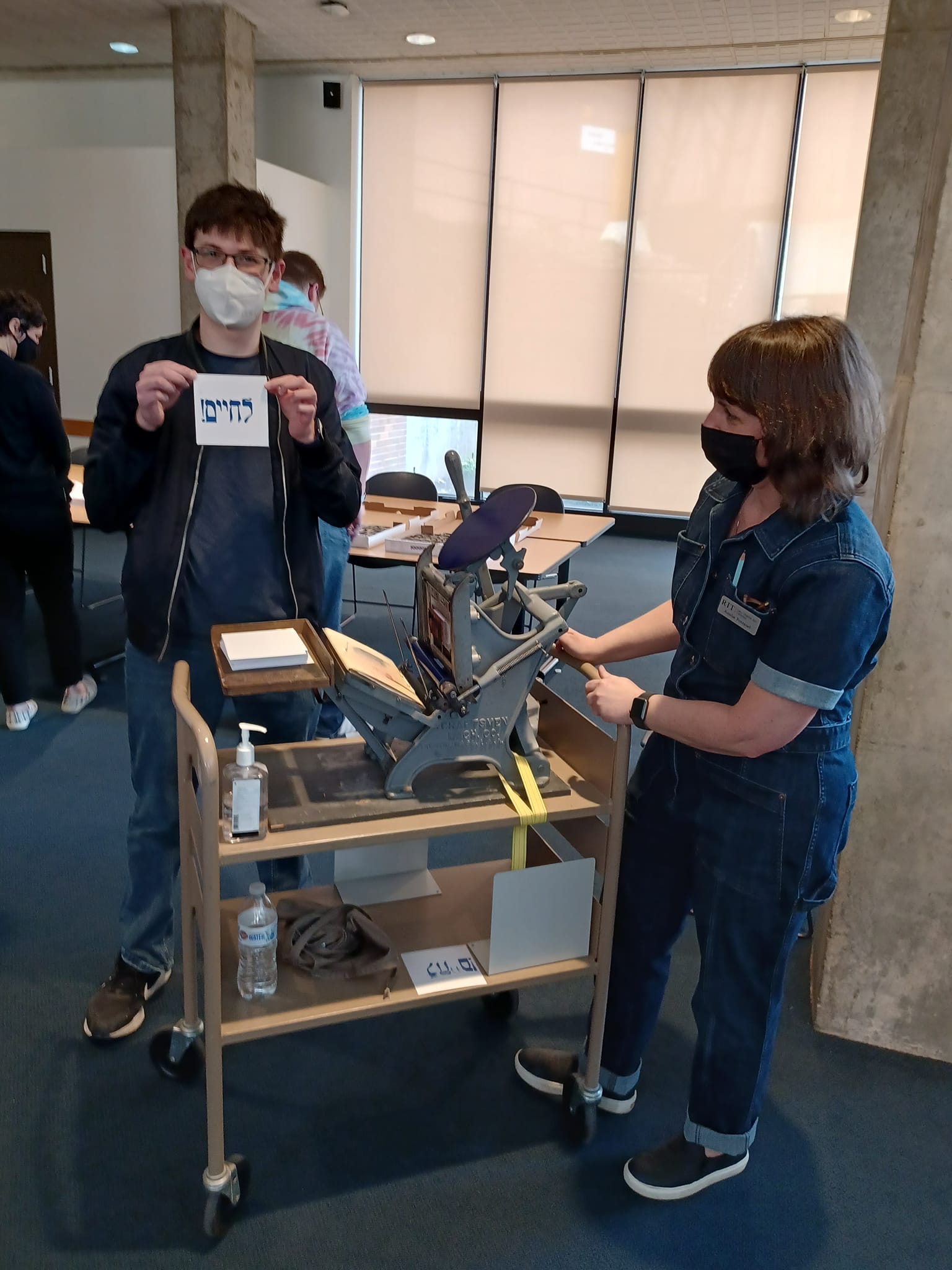 Amelia Hugill-Fontanel brings table-top presses to events on the RIT campus. Here, “L’chaim” was printed with Cary’s vintage Hebrew wood type collection.
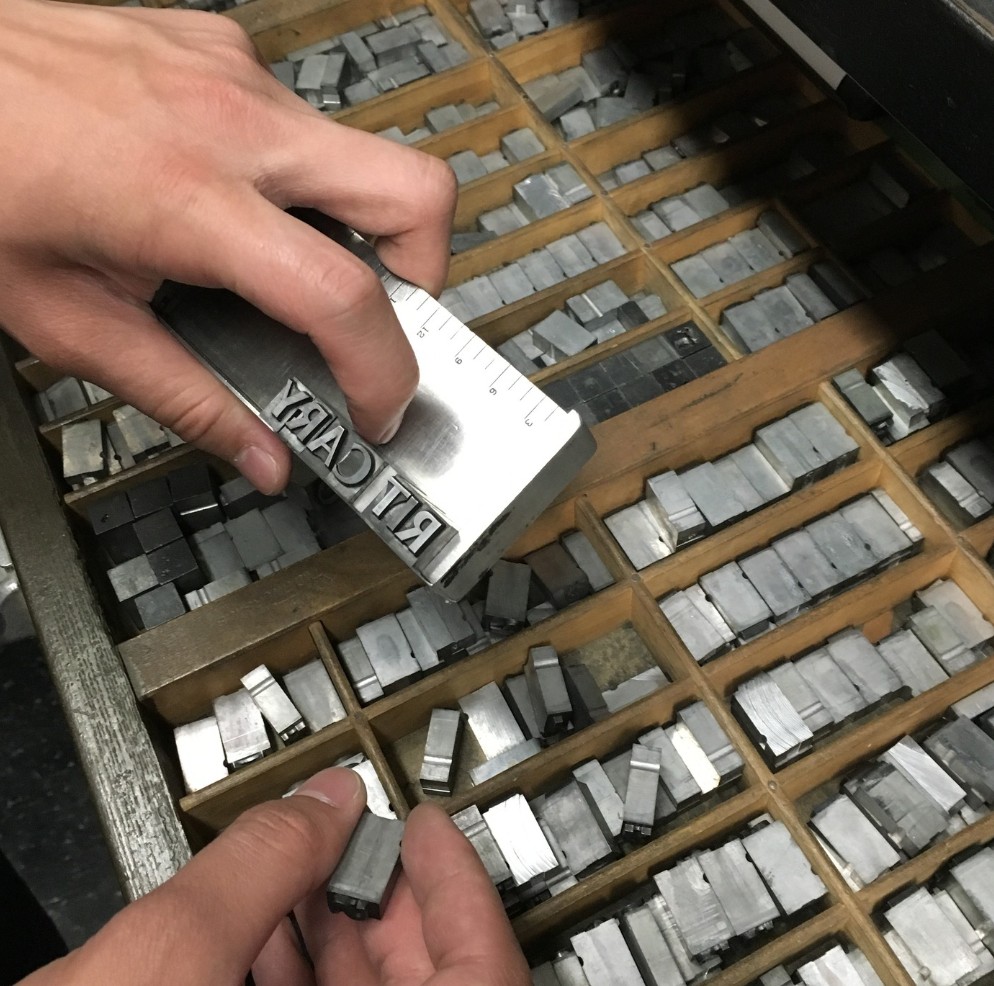 Setting type with a composing stick.
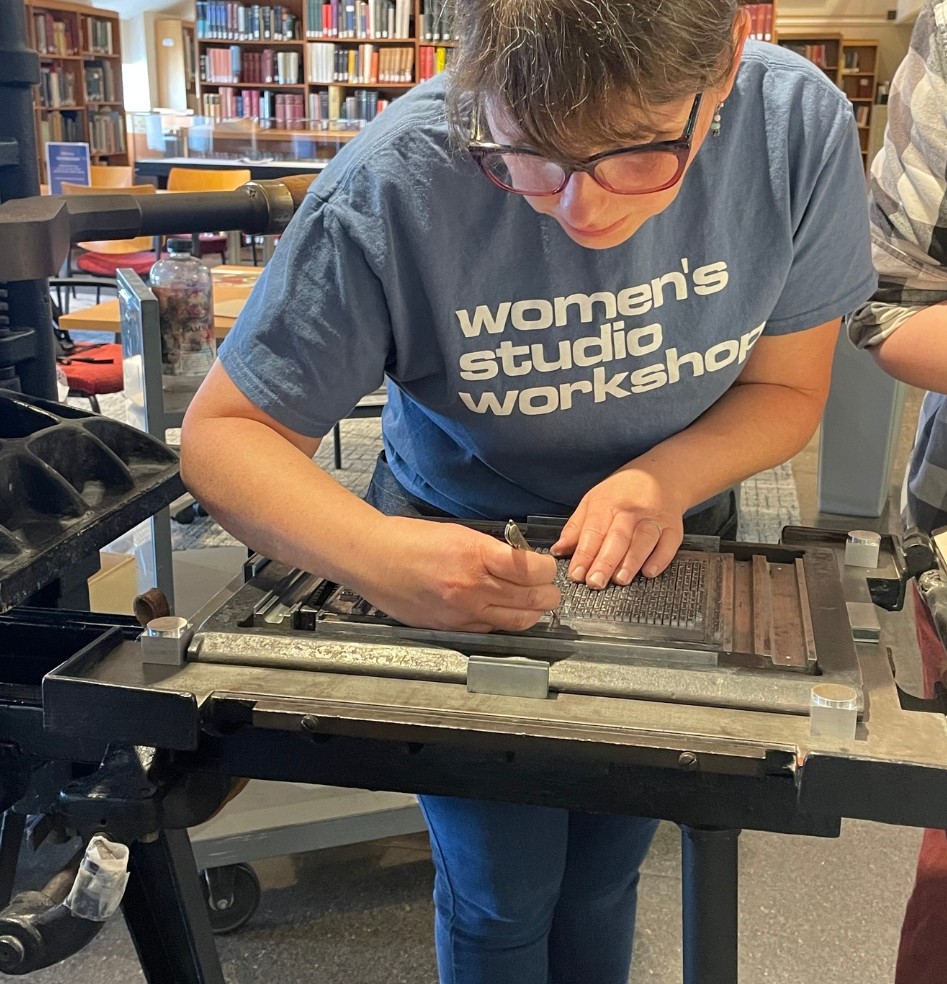 Amelia Hugill-Fontanel adjusting the typographic form on a Washington iron handpress at the University of Rochester Rossell Hope Robbins Library.

Curator / Podcaster / Fair Organizer
Ann Shafer is an independent curator, art historian, and a leading expert on the legacy of Stanley William Hayter and Atelier 17. As the creator and host of the Platemark podcast, she bridges the gap between technical print scholarship and the global community of artists and collectors.
Ann previously served as Associate Curator of Prints, Drawings, and Photographs at the Baltimore Museum of Art and has held curatorial positions at the Whitney Museum of American Art and the National Gallery of Art. She holds a BA from The College of Wooster and an MA from Williams College. Today, she channels her three decades of expertise into organizing the Brooklyn Fine Art Print Fair, co-editing a major centennial festschrift on Atelier 17, and leading curated art history tours across Europe. (Photo credit: Becky Redett)
Show Notes: s3e119 Curtis Bartone